
Portable power systems (EcoFlow, Jackery, and similar) are designed for mobility, not permanent installation. They’re useful tools in the right context, but they are not a substitute for a properly installed electrical system
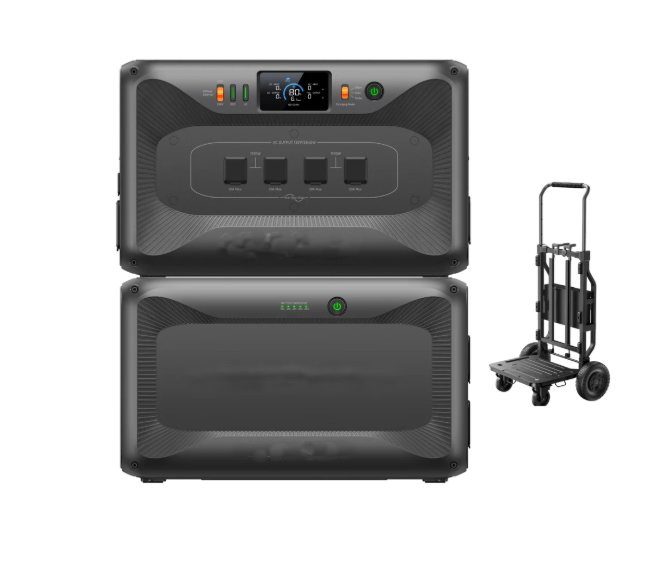
Where they work well
- Portable systems shine when you need flexible, temporary power:
- Backup during outages (fridge, internet, sump pump, etc.)
- Camping or off-grid trips
- Situations where you want to move power where it’s needed
Their core advantage is simple: you can take them with you.
Where the limits show up
That portability comes with trade-offs.
These systems are designed to be:
- Plugged in, not hardwired
- Temporarily connected, not permanently installed
They typically:
- Have limited output capacity
- Recharge more slowly (especially from small solar inputs)
- Struggle with large or sustained household loads
Solar: temporary vs permanent
You can connect solar modules to most portable systems, but the same rule applies: temporary use only.
Once solar panels are:
- Fixed to a roof, or
- Installed on a permanent ground mount
…they are no longer “portable.” At that point, the installation becomes subject to permitting and inspection requirements (Electrical Safety Authority, building permit, etc).
Safety and certification
Portable systems are certified as consumer products. That’s different from a permanently installed electrical system.
Installed systems must meet additional requirements, including:
- Grounding and bonding
- Arc fault protection
- Rapid shutdown (for solar)
- Inspection and approval
Those requirements exist for a reason — especially for emergency responders and long-term safety. With portable systems, you’re trading some of that structure for convenience.
Compatibility matters
If you’re adding solar or accessories, it’s best to stay within the manufacturer’s ecosystem. These systems are designed as closed platforms, and mixing components can create performance or safety issues.
The takeaway
Portable power systems are a good fit for temporary, flexible power needs.
If you’re looking for something permanent, integrated, or capable of supporting larger loads, that’s where a properly designed and installed system becomes the better tool.
And as always: solar isn’t inherently “safe” just because it’s DC. Used properly, it’s very effective. Used improperly, it can be dangerous