

Solar is an interesting example of what “buy local” really means.
Solar panels, inverters, batteries, and other equipment are part of global supply chains. But a solar installation itself is inherently local: it has to be designed for a particular building, connected to a local electrical system, approved under local rules, and physically installed and serviced by people who can show up at your door.
Even if a solar project involves local labour, does choosing a locally owned business really matter?
We think it does.
More than the installation
A substantial part of the value in a solar project isn’t the equipment. It’s the knowledge and work that turns that equipment into a functioning energy system.
That includes design, engineering, permitting, utility coordination, electrical work, installation, commissioning, troubleshooting, and long-term service.
Choosing a locally owned contractor helps keep more of that economic activity in the community. It supports local jobs, local suppliers, and businesses whose employees and owners live and spend money here.
But there’s another benefit that’s less obvious.
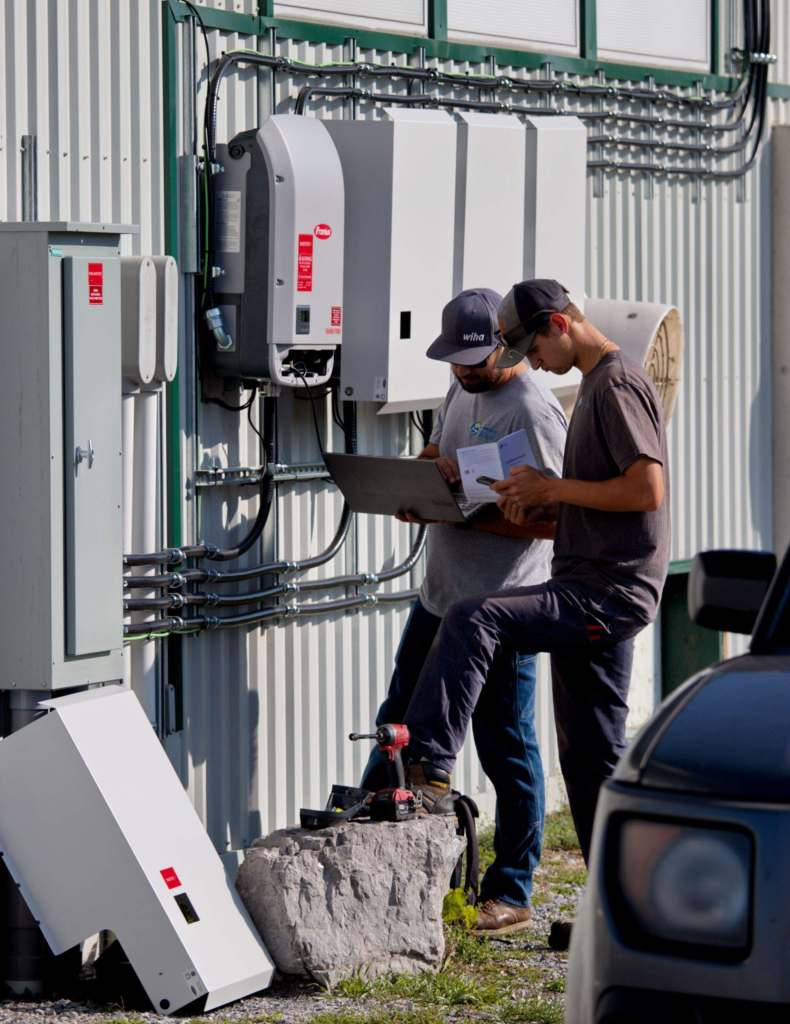
Buying local builds local capability
Every project develops experience.
It gives electricians, designers, engineers, installers, and technicians opportunities to develop skills in solar, batteries, energy management, EV charging, and the increasingly complicated electrical systems that connect them all.
Those skills don’t disappear when the project is finished. They become part of the community’s technical capacity.
That’s important because the transition to cleaner, increasingly electrified energy systems isn’t just about manufacturing more equipment. We also need people who know how to design it, install it, integrate it, maintain it, and fix it.
Supporting local businesses helps build and retain that expertise.
Local also means accountable
Solar is a long-term investment. There’s value in working with people who understand the local utilities, regulations, buildings, and climate—and who are nearby when you need advice, support, or simply have a question.
Local means accessible. And accountability matters long after the installation is complete.
Resilience isn’t just about supply chains
We often talk about economic resilience in terms of where products are manufactured and how far they have to travel.
That’s important—but it’s only part of the picture.
A resilient community also needs local businesses with the people, knowledge, equipment, and experience required to actually get things done.
For solar and energy storage, buying local doesn’t just support the local economy. It helps build the local capability we’ll need for the future.